Categories
New

Shop Premium kitchen knives for Every Home Chef Today

Cuisine::pro® brings pro-grade tools to home cooks with the Damashiro® Emperor and iD3® lines. These collections deliver edge retention and balance so you can work faster and with more confidence.

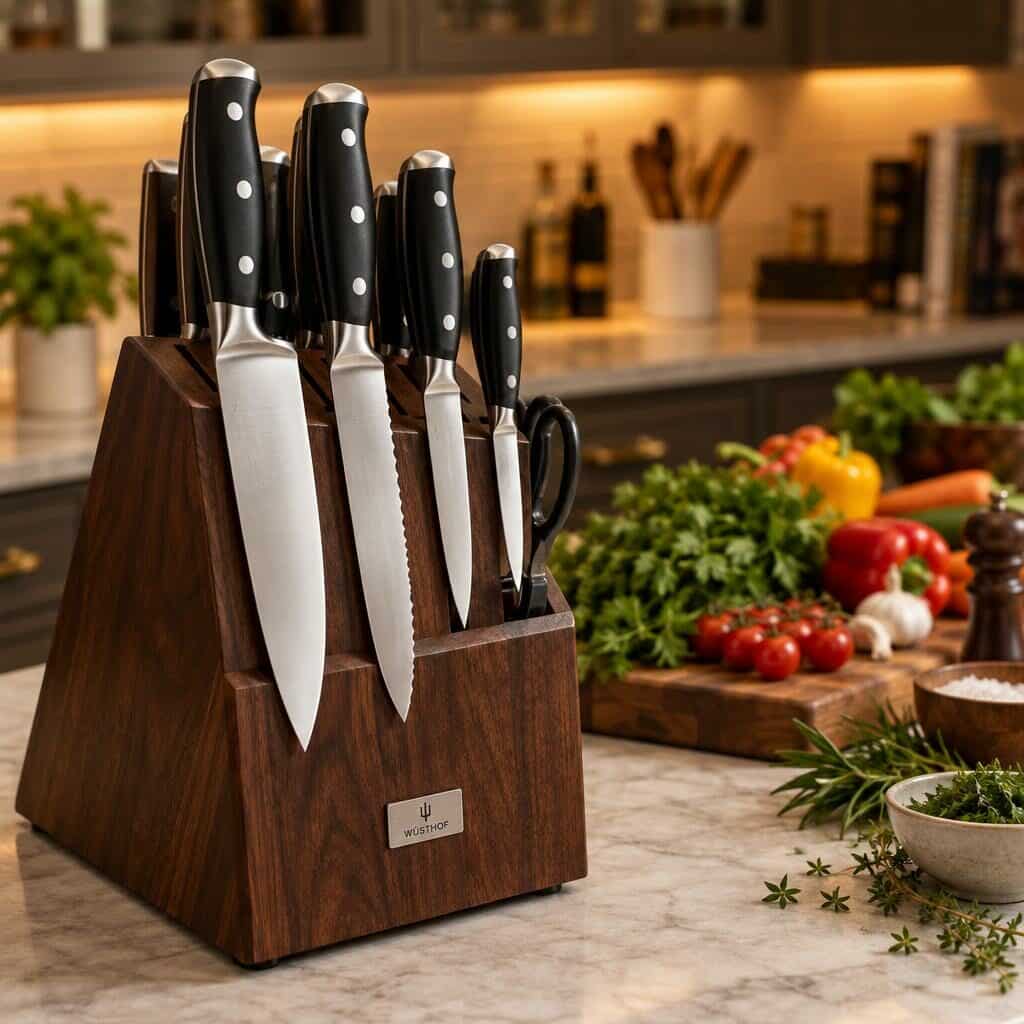
Choosing the right set is a foundational choice for any home. A well-made knife set and a thoughtful knife block keep your workspace tidy and your blades safe.

We back every chef knife with reliable shipping and careful packaging. That means your upgrade arrives quickly and ready to use, so you can start cooking better meals right away.

Key Takeaways

  • Professional lines: Damashiro® Emperor and iD3® offer pro-level performance.
  • Complete sets: Curated knife set options include a practical block for storage.
  • Built for home chefs: Chef knives in this collection suit both complex and daily tasks.
  • Safe delivery: Fast, reliable shipping ensures your tools arrive in top condition.
  • Smart investment: Choosing a premium set improves skill, speed, and confidence.

Elevate Your Culinary Skills with Premium Kitchen Knives

A single well-made blade can change how you approach every recipe.

Cuisine::pro® is engineered to deliver superior cutting performance for home cooks and pros alike. A high-quality chef knife gives balance and sharpness that make prep faster and more consistent.

Integrating a professional knife set into daily routines helps you work with both simple vegetables and complex proteins. A tidy knife block keeps essential tools within reach and protects edges so they stay ready.

These chef knives offer the durability and feel that boost confidence at your station. Choosing the right tools is a meaningful choice that affects every meal.

Item Best for Durability Storage
Chef Knife All-purpose prep High Protective sheath
Knife Set Full meal prep High Wood block or modular
Knife Block Organization Protects blades Countertop friendly

Understanding Blade Artistry and Performance

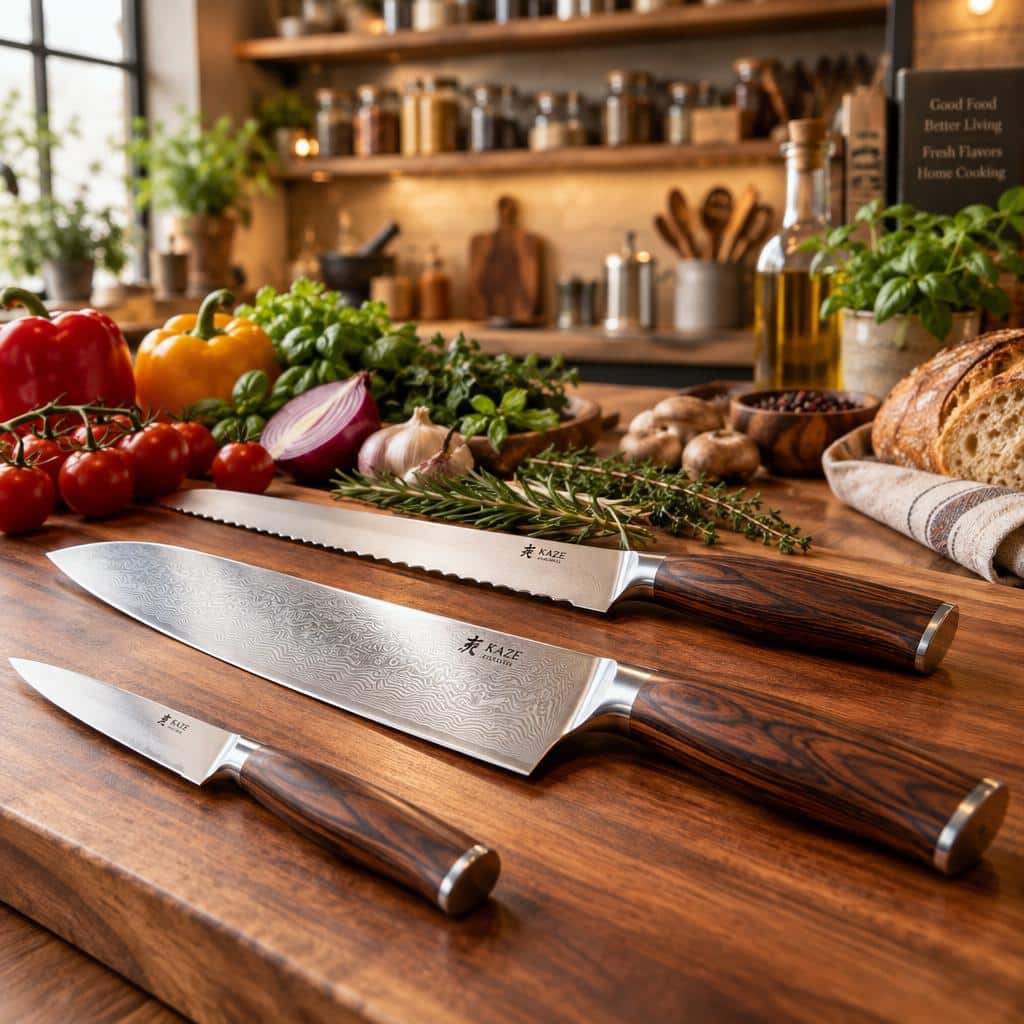
Fine blade work begins where material science meets craftsman’s eye. Our approach fuses careful design with high-grade metallurgy to deliver consistent performance and lasting value.

Stainless Steel Durability

Stainless Steel Durability

We use premium stainless steel to resist corrosion and hold an edge longer. This steel balances hardness with toughness so the blade stays reliable during daily use.

Each set ships with a sturdy block to protect edges and prevent nicks. Proper storage preserves sharpness and extends the life of every blade.

The Science of Sharp Edges

The Science of Sharp Edges

The geometry of the edge dictates how smoothly you slice. A refined angle and polish lower resistance for cleaner, safer cutting.

Precision matters: we test balance and sharpness so each knife feels intuitive and performs predictably under real cooking conditions.

  • Artistry: meticulous forging and finishing create a refined edge.
  • Performance: tested balance ensures smooth control during prep.
  • Choice: selecting quality steel is an investment in long-term efficiency.

Essential Chef Knives for Every Home Kitchen

Every well-stocked home benefits from a reliable chef tool that tackles daily prep with ease. A good knife helps you chop, slice, and trim faster so meals come together with less stress.

Our essential knife set bundles the most used blades into a smart block. Each piece sits ready for use and protects edges when stored.

Crafted in durable stainless steel, every blade stands up to daily wear while keeping a sharp, professional edge. The balance of steel and handle design makes long prep sessions easier on your hands.

“Choose tools that last; the right blade becomes the center of your prep routine.”

Having a dedicated kitchen knife for specific tasks is a smart choice. It speeds work and improves accuracy, whether you’re mincing herbs or portioning protein.

We offer options that match budgets without sacrificing performance. A well-stocked knife block signals a serious home cook and keeps your knives organized, accessible, and ready for every recipe.

Precision Paring Knives for Delicate Tasks

For fine work, a steady small blade gives control you can trust. A well-made paring knife handles tight curves, tiny seeds, and neat garnishes with ease.

Choosing the right blade width

Choosing the Right Blade Width

Blade width affects how much control you have during close cutting. Narrow blades excel at detailed paring and trimming of small vegetables.

Wider paring blades add stability for slicing small fruits and for slightly larger tasks. Think about the work you do most when you pick a blade width.

  • Cutco Paring Knife — $103: a trusted prepping essential that delivers steady precision for peeling fruits and detailed work.
  • Included in our set: each knife set features a dedicated paring piece for fine tasks and fits neatly in your knife block.
  • Compact design: easy to handle, ideal for steady, accurate cutting and professional-looking garnishes.
  • Care tip: store the paring knife in a block to protect the blade and keep it sharp for delicate work.

Whether trimming fruits or finishing a garnish, a quality paring tool brings the precision every home chef needs. Add one to your set to complete your prep lineup.

Versatile Utility and Santoku Options

Balanced utility knives and santoku designs deliver fast, reliable results for daily tasks.

The Cutco Trimmer costs $110 and is a versatile utility tool built for quick prep. It offers the balance and sharpness you need for consistent results in every session.

Our santoku options bring a unique design that excels at dicing and clean slicing. The santoku blade is engineered for precise work on fruits and vegetables, so you get professional-level cutting with less effort.

A complete knife set should include a reliable utility piece. Store both utility and santoku blades in a smart knife block so each tool is ready and protected.

  • Cutco Trimmer — $110: a go-to utility for fast, professional results.
  • Santoku: ideal for dicing, slicing, and processing fruits with clean cuts.
  • Block-ready: keep these tools in your block to preserve edge life and access.

“A well-chosen utility and a santoku together expand your prep options and speed.”

Specialized Blades for Meats and Carving

Specialized carving blades make holiday roasts and weekday steaks precise and effortless.

These tools are built for long, clean slices and repeatable results. A proper carving blade preserves the grain of meats and reduces waste.
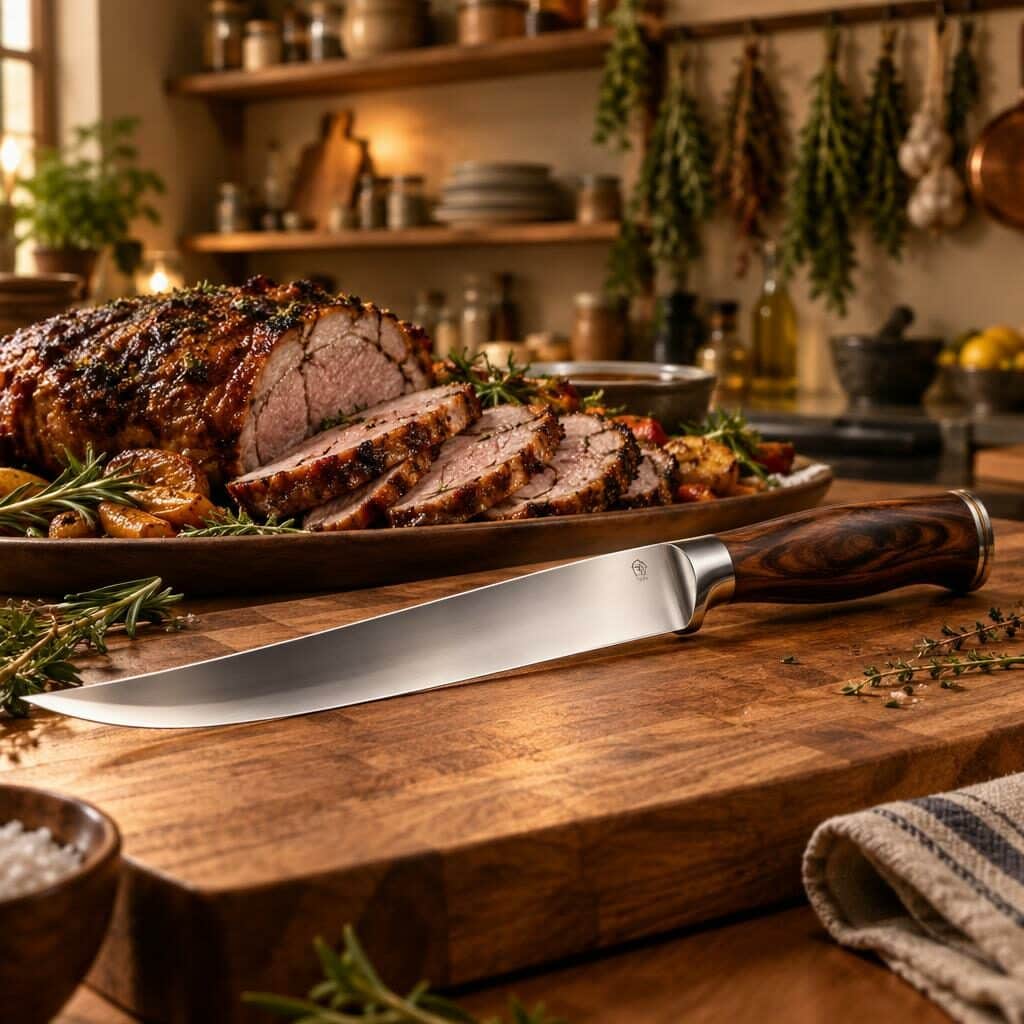
carving blade

Butchering Larger Cuts

A quality Cutco Carving Knife, priced at $162, handles large roasts and whole birds with ease.

Use a chef knife for initial butchering, then switch to the carving blade for finishing and presentation.

  • Precision: long, thin blade for smooth carving and neat portions.
  • Edge retention: the steel stays sharp through repeated holiday meals.
  • Storage: keep carving blades in a dedicated knife block or block slot to protect the edge.

Filleting Fresh Fish

Filleting needs a flexible, thin blade for near-bone work and tight skinning. The carving piece in our set doubles for light fillet tasks.

Pair the carving knife with our Cutco Table steak knives at $68 for clean slices at the table. These steak blades glide through the thickest steak without tearing.

“A dedicated carving knife lets you slice with confidence and present meats like a pro.”

Item Best use Price Key benefit
Cutco Carving Knife Roasts & large meats $162 Long blade, smooth carving
Cutco Table Steak Knife Table slicing for steak $68 Sharp edge, no tearing
Chef Knife (support) Butchering & dicing Varies Precision and steel durability

Effortless Bread Slicing Solutions

Slicing fresh loaves should be effortless, not a battle with crumbs.

The Cutco Bread Knife, priced at $163, glides through crusty and soft bread without squashing the interior.

Its specialized edge lets the blade cut cleanly so you get neat, uniform slices and professional results every time.

Include a dedicated bread knife in your knife set and keep it in your knife block or block slot to protect the edge.

  • Versatile use: designed to slice bread and thinly cut fruits without tearing.
  • Consistent performance: the serrated geometry preserves texture during cutting.
  • Smart addition: one bread knife rounds out a set for daily prep and serving.
Item Best use Price
Cutco Bread Knife Sourdough, rolls, soft loaves $163
Bread Slot (block) Safe storage, protects edge Included with set
Utility Knife Small slicing & fruits $110

“A proper bread knife turns every loaf into beautiful slices.”

Gourmet Cheese and Table Cutlery

A thoughtful selection of cheese tools and table cutlery turns casual hors d’oeuvres into a polished spread.

Cutco Table Knives ($68) bring reliable performance to every meal with quality stainless steel construction. They handle table service whether you’re slicing steak or arranging a salad.

The Cutco Cheese Knife ($131) features a unique edge that glides through hard and soft cheese alike. Its specially shaped blade prevents sticking for clean, precise portions.

cheese cutlery

Entertainers will appreciate practical storage: place these pieces in your block so the best tools are always ready.

  • Versatile use: the cheese blade works well with cured meats, fruits, and root vegetables alongside your favorite cheese blocks.
  • All-in-one table set: adding gourmet cheese tools elevates any gathering, from casual snacks to formal dinners.
  • Better cutting: a well-shaped edge and balanced blade create smooth slices and a refined presentation.

“A dedicated cheese tool brings clean cuts and confident service to every table.”

The Importance of Handle Design and Balance

When the handle fits, precision follows—every cut becomes more intentional and controlled.

Handle design matters for comfort and control during long prep sessions. A well-shaped handle reduces wrist strain and improves grip. This helps you keep consistent motion and better results.

A properly balanced chef tool feels like an extension of your hand. We test weight distribution so each blade and grip align naturally with your motions.

Consider balance when you choose a full set or a storage block. A poorly weighted block can make retrieval awkward and unsafe.

  • Ergonomics: contours that fit many hand sizes.
  • Durability: tested materials for long-term grip.
  • Balance: tuned weight so cuts track true.

“A perfectly balanced chef knife makes daily prep feel less like work and more like craft.”

Feature Benefit What to look for
Ergonomic handle Less fatigue, better control Contoured grip, non-slip surface
Balanced weight Smoother cuts, improved accuracy Neutral pivot, even front-back feel
Block storage Protected edges, safe access Stable base, correct slot spacing

Quality Assurance and Lifetime Guarantees

A lifetime promise changes how you value each blade and block.

All Cutco® products are backed by The Forever Guarantee. If a knife or set ever fails to meet your expectations, we will correct performance issues or replace the item.

We inspect every block and set before shipping. That ensures the steel and fit arrive ready to perform.

  • Lifetime coverage: repair or replace any Cutco® item for life.
  • Stainless steel promise: blades are supported for lasting performance.
  • Reliable shipping: fast, tracked delivery so your purchase reaches you safely.

“Our guarantee turns a one-time buy into a lifetime of confidence.”

Promise What it means Benefit
Forever Guarantee Repair or replace Long-term peace of mind
Pre-shipment Inspection Block & set checked Consistent performance
Trusted Shipping Tracked delivery Safe arrival

Conclusion

Upgrading to professional-grade blades makes prep faster and yields better results. Explore our collection of knives kitchen options to find tools that match your pace and taste.

Invest in the right set and you gain consistency. Every chef knife and complementary knife in the lineup is built for balance, edge retention, and long-term performance.

We back each purchase with reliable shipping and service. With precision and durability at the core, these blades help you cook confidently and create memorable meals for years to come.

FAQ

What types of blades should I consider for everyday cooking?

Look for a versatile chef’s blade in high-grade stainless steel for durability and easy maintenance. Pair that with a paring knife for small tasks and a serrated loaf blade for breads. A santoku offers precise dicing and slicing, while a carving or chef knife handles larger meats and roasts.

How do I choose the right handle for comfort and balance?

Choose a handle that fits your grip and feels balanced with the blade. Materials like pakkawood, molded polymer, or stainless steel each offer a different weight and grip. A full-tang design usually provides the best balance and control for prolonged use.

How often should I sharpen my blades?

Sharpening frequency depends on use: home cooks typically sharpen every 3–6 months and hone weekly to maintain the edge. Professional chefs or heavy users may need more frequent sharpening. Use a whetstone or a reputable sharpening service for best results.

Are stainless steel blades better than high-carbon steel?

Stainless steel resists corrosion and needs less maintenance, making it ideal for busy households. High-carbon steel holds a finer edge longer but requires more care to prevent rust. Consider stainless if you want low upkeep and performance that stays consistent.

Can one set cover all tasks or should I buy individual pieces?

A quality set with a chef knife, paring knife, serrated blade, and utility knife covers most needs. Buying individual specialty blades—like a boning or fillet knife—for specific tasks improves results if you frequently prepare meats or fish.

What’s the best blade width for paring and detail work?

For paring and delicate tasks, a narrow blade between 2.5 and 4 inches offers precision and control. A slightly wider profile suits peeling and small chopping, while a slimmer blade helps with intricate cuts and garnishing.

How should I clean and store my knives to preserve edges?

Hand-wash and dry blades immediately after use to prevent corrosion. Store knives in a block, on a magnetic strip, or in a protective sheath to protect the edges and avoid contact with other utensils. Avoid dishwashers, which dull and damage blades.

What features matter for carving and butchering larger cuts?

Look for a long, narrow blade with a fine edge and good flexibility for carving. A sturdy, longer chef or slicer helps with larger roasts; for butchering, a heavier boning knife or butcher’s blade provides the power and control needed for separating joints.

Are serrated blades necessary for bread and delicate crusts?

Yes. Serrated blades cut through crust without crushing the interior. Choose a long, scalloped serrated blade for even slices of artisan loaves, baguettes, and delicate cakes.

Do premium blades come with warranties or lifetime guarantees?

Many reputable brands offer limited or lifetime warranties covering manufacturing defects. Always check the specific terms from makers like Wüsthof, Zwilling J.A. Henckels, or Victorinox and follow recommended care to keep warranty coverage valid.

How important is blade artistry and edge geometry for performance?

Very important. Edge angle, grind, and polish affect how a blade slices, how long it stays sharp, and how easy it is to maintain. Blades with precise edge geometry deliver cleaner cuts and better control, improving overall performance and results.

Can I use the same knife for meats and cheese or should I use separate tools?

It’s best to use separate blades. Meat can transfer proteins and juices that affect flavor and hygiene on cheese or produce. Designate specific knives for dairy and ready-to-eat foods, or clean thoroughly between uses.

What should I consider when buying a knife set with a block or magnetic strip?

Check blade variety, handle comfort, and block quality. A good block should protect edges and offer easy access. Magnetic strips save counter space and keep blades dry, but ensure magnets are strong and mounted safely.

How do I care for specialty tools like fillet and boning knives?

Keep them razor-sharp and clean immediately after use. Use flexible fillet blades for fish to follow bones, and stiffer boning knives for heavier meat. Store separately to preserve their thin, delicate edges.

Is professional sharpening worth it compared to at-home methods?

Professional sharpening provides precise edge restoration and can correct damage. At-home options like honing rods and guided sharpeners work for regular maintenance, but send blades to a pro when edges need re-profiling or have chips.
Categories
New

Kitchen Knives for Home Cooks and Professional Chefs

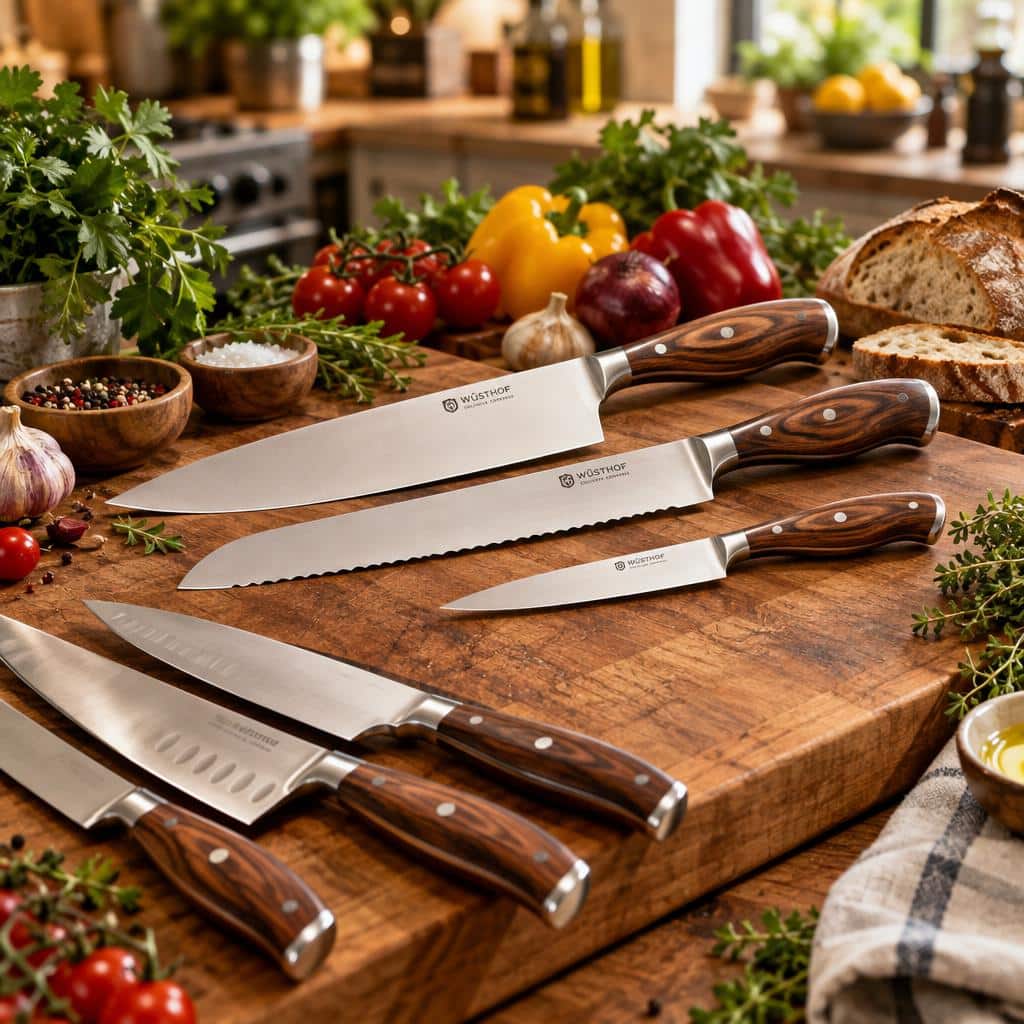
WÜSTHOF has stood at the heart of German blade making in Solingen for over 200 years. From the forge to your prep area, their tools blend tradition with modern design.

Investing in quality gear is the first step toward mastering meals at home. Our curated collection of professional-grade kitchen knives helps both beginners and seasoned cooks reach precise, reliable results.

Every knife we feature is built to last. These tools keep sharpness through years of daily use and aim to serve generations. Right now, we are running a major sale that makes premium cutlery more accessible.

Join a community of enthusiasts who tag #MyWusthof to share collections and cooking wins. Whether you want a single chef blade or a full set, upgrading your tools can change how you prepare meals.

Key Takeaways

  • WÜSTHOF brings 200+ years of Solingen craftsmanship to your home.
  • High-quality gear helps home cooks match pro results.
  • Featured knives are made to hold sharpness for years.
  • Current sale offers a chance to upgrade for less.
  • Share your set with #MyWusthof to join the community.
  • Options fit beginners and professional chefs alike.

The Importance of Quality Kitchen Knives

A well-made blade changes how you work at the counter and how safe you feel while doing it. A reliable knife becomes an extension of your hand, letting you move with control and repeat the same cut every time.

Durability matters. David D. has used his WÜSTHOF set daily for nearly 20 years. That kind of longevity shows why investing in premium tools pays off.

  • Safety: A sharp blade cuts cleanly and reduces slips.
  • Precision: Consistent edges make complex techniques easier.
  • Care: High-quality options are easy to maintain.

“My set still performs like new after two decades.”

— David D.

Feature Benefit Short-Term Long-Term
Sharpness Faster prep, fewer accidents Immediate Retains edge with care
Balance Better control Noticeable at once Less fatigue over years
Build quality Durability Reliable daily use Decades of service
Maintenance Easy upkeep Simple routines Extends lifespan

Our current sale makes it a great time to replace dull, dangerous blades with high-performance tools. We believe every home cook deserves pro-level gear that makes meal prep enjoyable.

Essential Blades for Every Home Cook

A compact collection of essential blades gives you the most useful options for everyday prep. Start with a focused plan so your tools match real tasks, not gadget goals.

The Foundation of Prep

Build a base set that includes a chef’s knife, a paring knife, and a utility blade. These three tools cover nearly all routine meal work and limit the need for extra purchases.

Selecting Your First Tool

Comfort matters. When you hold a blade, note its balance and weight. Choose the one that feels natural during longer prep sessions.

  • Value: The Partner 3-Piece Set is $270 now, compared with $340 if bought separately — a clear saving on our current sale.
  • Versatility: That trio handles slicing, detail work, and mid-sized tasks with ease.
  • Durability: Each piece is made to hold an edge for regular use and save maintenance time.

Shop the sale and pick a starter set that builds skill and confidence. A smart first purchase sets the stage for many great meals.

Professional Grade Performance for Culinary Experts

Top chefs rely on tools that hold their edge under the heaviest service. Professional grade performance means a chef knife stays sharp through long, high-volume work and keeps cuts precise.

Our collection meets exacting standards that culinary experts expect. Each product uses high-performance materials so a demanding chef can trust durability and consistent performance.

The Gourmet 8″ Chef’s Knife is on limited-time sale for $75 (was $100). It offers dependable edge retention and versatile balance, making it a favorite for pros handling diverse ingredients.

  • Edge retention: Lasts through long shifts with routine care.
  • Reliability: Balanced feel for precise motion.
  • Value: The sale makes a professional set attainable for more cooks.
Model Use Material Current Price
Gourmet 8″ Chef’s Knife All-purpose prep High-carbon stainless $75 (sale)
Pro Utility Knife Detail cuts Powdered steel $65
Starter 3-Piece Set Everyday tasks Stainless core $270 (bundle)
Heritage Chef Knives Premium service Forged alloy $180+

“A superior chef knife is the hallmark of a professional kitchen.”

Understanding Blade Materials and Steel Quality

Choosing the right steel shapes how a blade performs from the first slice to years of use.

Good steel balances sharpness, toughness, and corrosion resistance. That trio matters whether you work at home or in a professional kitchen.

Shun’s design uses 71 alternating micro layers of VG10 and VG2 stainless steel. This layered construction gives lasting sharpness and a striking finish.

The right stainless steel reduces rust, keeps an edge longer, and makes maintenance easier. A high-grade blade will outlast cheaper alternatives by a wide margin.

The practical benefits

  • Durability: premium steel resists wear and holds edge.
  • Performance: advanced alloys improve slicing and control.
  • Value: our current sale includes models made from top-grade steel, so quality is more affordable.

“Modern steel engineering turns raw metal into tools that stay sharp through heavy daily use.”

Material Benefit Why it matters
VG10 / VG2 layered steel Edge retention, beauty Combines hardness with corrosion resistance
High-carbon stainless Sharpness, easier sharpening Good balance for everyday use
Powdered steel Durability, fine edge Performs well under heavy service

The Versatility of the Chef Knife

A single chef knife can streamline nearly every task at the prep table, from fine herbs to robust joints.

Corinne G. uses her chef knife every day and calls it a fantastic, versatile tool. She finds that one high-quality knife replaces many specialty tools and speeds work.

A truly versatile chef knife should feel like an extension of your arm. It must balance control for delicate trims and power for heavier cuts. That feel matters whether you are a home cook or a professional chef.

“I use my chef knife for almost everything — it’s the most trusted item in my prep area.”

— Corinne G.

  • Everyday use: Mincing, slicing, and breaking down protein with one tool.
  • Value: Our current sale includes many chef knife options and attractive set bundles.
  • Adaptability: One well-made blade covers delicate and heavy tasks.
Feature Benefit Best For
Blade length & balance Comfort and control Slicing, chopping, rocking cuts
Edge retention Less frequent sharpening Daily prep work
Handle fit Reduced fatigue Long shifts or big meals

Precision Cutting with a Paring Knife

Small blades deliver big accuracy when your task calls for fine trimming and delicate work.

Paring tools shine on detail: peeling, shaping garnishes, and removing seeds. A high-quality paring knife gives you the control needed for those exact cuts.

Our selection focuses on balance and feel. That control reduces slips and improves consistency on small fruits and vegetables.

The Classic 3” Serrated Paring Knife is on sale for $57, down from $95 for a limited time. It shows how a compact serrated edge can make precision cutting easier and safer.

  • Precision: Small blade, steady hand—clean trims every time.
  • Control: Designed for tight curves and delicate work.
  • Value: Take advantage of the sale to add a reliable paring to your set.

“A sharp paring knife is essential for garnishing and delicate techniques.”

Utility Knives for Everyday Prep Work

A trusty utility blade fills the gap between large chef tools and tiny detail cutters.

The Cutco utility knife is a go-to for everyday prep, designed to handle varied tasks with speed and control.

Comfort matters: choose a knife that fits your hand so you can work longer without fatigue.

On our current sale, several utility options and set bundles give great value for daily use.

  • A reliable utility is essential for routine prep and bridges chef and paring tools.
  • Cutco models offer versatile performance across quick slicing, trimming, and small prep tasks.
  • Each item in the collection is built to last, making it a dependable tool for everyday work.

“A good utility knife simplifies daily tasks and makes professional results easier at home.”

Specialized Slicing with Bread Knives

Serrated blades make the difference between a crushed loaf and clean, consistent slices. A true bread knife is built to glide through crust without compressing the soft crumb inside.

bread knife

Cutco’s bread knife is a prime example — it cuts clean rounds with minimal effort. That design shows how a sharp, well-shaped edge improves slicing and keeps loaves intact.

  • Purpose-built serration: Designed to cut crusts without tearing soft interiors.
  • Durability: Invest in a bread knife that holds its edge for years of regular use.
  • Value on sale: Our current sale includes select bread options and set bundles for great savings.

“A dedicated serrated blade makes serving fresh bread a true pleasure.”

Choose a reliable bread knife for clean slicing every time. It’s an essential tool in any home set and worth adding while the sale runs.

Mastering Vegetable Prep with Santoku and Nakiri

A dedicated Santoku or Nakiri transforms routine chopping into precise, confident work.

Techniques for Clean Slicing

Use a slicing motion for long vegetables and a rocking or straight chop for denser produce. Keep your tip engaged and guide slices with a steady, even rhythm.

Practice thin, consistent cuts to speed prep and improve presentation. Paring tasks are easier when you switch to a small blade for trims.

Benefits of Japanese Geometry

Santoku geometry offers a shorter, flatter profile ideal for dicing and quick slicing. The Nakiri excels at straight, clean cuts on leafy greens and roots.

The Shiranami Nakiri is a refined vegetable specialist built for fast, precise slicing. Shun blades are handcrafted in Seki City through more than 100 steps to ensure top quality.

Model Best For Key Feature
Santoku Dicing, multi-task prep Granton or flat edge for quick slicing
Shiranami Nakiri Vegetable work, clean cuts Thin, straight blade for precision
Shun Handcrafted Everyday prep & paring Layered steel, artisanal finish

Shop our current sale to add a Santoku or Nakiri to your set and lift vegetable prep with precision and speed.

Steak Knife Sets for Elevated Dining

A precise steak blade turns a meal into a memorable moment for guests. The right steak knife set delivers clean, tear-free cuts and adds a touch of style to the table.

The Classic 4-Piece Steak Knife Set is on limited-time sale for $249, reduced from $325. This classic set pairs refined looks with reliable performance for both formal dinners and relaxed weekend meals.

These steak knives glide through thick cuts of meat without tearing. They make each portion easier to serve and more enjoyable to eat.

  • Elevated dining: clean cuts that show off the quality of your meat.
  • Style and performance: a classic set that suits many table settings.
  • Value on sale: several steak knife options and sets are available to match your existing collection.

“A good steak knife should glide through meat without tearing.”

Shop the sale now to invest in a durable steak knife set that will impress guests and improve every steak night for years to come.

Maintaining Your Edge with Proper Sharpening

Keeping a keen edge turns routine prep into fast, confident work.

Regular sharpening keeps each knife in your set safe and precise. A sharp edge reduces slips and makes every cut cleaner. You’ll notice better performance and less effort as you work.

Hand-Held Sharpening Tools

The Classic Ikon Hand-Held Knife Sharpener is available for $85 and offers a dependable way to refresh an edge at home. For budget-friendly upkeep, the Universal Hand-Held Knife Sharpener is priced at $45.

Our current sale includes these sharpeners, so now is a smart time to protect your investment and extend the life of a full set.

  • Maintaining the edge of your knives is essential for long-term performance and safety.
  • Hand-held tools make sharpening fast and simple, delivering near-professional sharpness.
  • Regular care ensures consistent precision for all daily work.
Model Price Best For Key Benefit
Classic Ikon $85 Frequent home use Reliable, consistent edge restoration
Universal Hand-Held $45 Occasional touch-ups Affordable, easy to use
Set Maintenance Kit $110 Full set care Complete tools for long-term sharpness

“A sharp edge is the foundation of good performance.”

Organizing Your Collection with Knife Blocks

Smart storage transforms a scattered set into a neat, reliable collection.

Protecting edges starts with the right block. The 25-Slot Acacia Knife Block is available for $110 and gives space for every knife you own. For smaller setups, the 15-Slot Acacia Knife Block costs $70 and fits a compact set with style.

knife block

Organizing your collection keeps blades accessible and safe. A quality block reduces wear and speeds prep on the counter.

  • Space for all: the 25-slot block protects large sets and specialty pieces.
  • Compact option: the 15-slot block is ideal for modest collections and tight spaces.
  • Sale value: our current sale includes several block set options so you can match form and function.
Model Slots Price Best For
Acacia 25-Slot 25 $110 Large collection, full set storage
Acacia 15-Slot 15 $70 Compact set, limited counter space
Universal Block Set Custom Varies (sale) Flexible layouts, mixed tools

“Investing in a quality block is the best way to protect your blades and keep them ready for years.”

Choosing the Right Cutting Board

A stable, forgiving board keeps work safe and helps blades perform better.

The right cutting board protects edges and makes prep smoother. Use a surface that absorbs impact without dulling your steel.

The Heat-Treated Beech Cutting Board is available for $150. It provides a durable, gentle surface for daily kitchen use and routine cutting tasks.

Investing in a quality board prevents premature dulling and gives a steady platform for precise, safe work.

  • Stability: A solid board reduces slips and improves control.
  • Surface care: Gentle wood extends edge life compared with hard synthetics.
  • System match: Our boards complement blades for a complete prep setup.

“A good cutting surface is the quiet partner that keeps edges sharp and work safe.”

Board Material Price Best For
Heat-Treated Beech Hardwood (treated) $150 Daily cutting, edge protection
End-Grain Maple Maple end-grain $180 Knife-friendly, self-healing
Eco Composite Recycled resin $90 Low maintenance, durable

Heritage and Innovation in Modern Cutlery

Heritage craft and modern metallurgy meet to shape tools that perform reliably in every service.

Shun blades are handcrafted in Seki City through more than 100 detailed steps. That artistry delivers measurable precision in every cut.

WÜSTHOF’s two-century history in Solingen brings a deep tradition to our range. Their methods blend time-tested forging with new heat-treatment and steel science for lasting quality.

Our collection highlights series that balance form and function. Each series pairs classic silhouettes with modern alloys to improve edge life and overall performance.

  • Heritage: craftsmanship that honors decades of technique.
  • Innovation: latest metallurgy and designs for better handling.
  • Value: a collection built to perform across home and professional use.

“Understanding a tool’s history deepens appreciation for its performance and precision.”

Finding the Perfect Knife Set for Your Needs

Picking the right set is about matching tasks to tools, not buying everything at once. Start by listing the work you do most: slicing vegetables, dicing meat, or prep for entertaining.

Starter Sets

The Gourmet Grey 3-Piece Starter Set is on sale for $149 (was $250). It includes a chef knife, a paring knife, and a utility knife—ideal for everyday prep and quick upgrades.

Professional Collections

Choose collections that emphasize advanced steel and edge control for top performance. Pro series focus on balance, long-lasting sharpness, and precise slicing for demanding tasks.

Gift-Worthy Options

The Dual Core 5-Piece Block Set pairs a chef, paring, and master utility knife with a honing steel and an expandable birch kickstand block. It’s a ready-made, stylish gift that protects edges and stores tools safely.

Set Includes Why Choose
Gourmet Grey 3-Piece Chef, Paring, Utility Great starter value, sale price
Dual Core 5-Piece Block Set Chef, Paring, Master Utility, Honing Steel, Block Gift-ready, safe storage, strong performance
  • Tip: Consider style, precision, and the included block for safe storage.
  • Shop the sale to unlock pro-level sets and fast shipping to the U.S.

“A thoughtfully chosen set makes prep faster and more enjoyable.”

Conclusion

The right blade at hand turns routine tasks into moments of skill and ease. Investing in quality kitchen knives helps you prep faster, slice with precision, and enjoy cooking more.

Our curated selection includes a trusted chef knife, a precise paring knife, and a reliable utility knife. Those tools, paired with proper care, make slicing vegetables, meat, and cheese simpler and safer.

Whether you want a full knife set, a steak knife set, a bread knife or a smart block set, our collection has options that match your work and budget. Take advantage of current sales and start your journey toward better results today.

Thank you for choosing us as your partner. Explore the full collection and pick the set that will serve you for years.

FAQ

What types of blades should a home cook start with?

Start with a chef knife, a paring knife, and a utility knife. These three cover most prep tasks: the chef handles slicing and dicing, the paring manages fine work like peeling and trimming, and the utility fills gaps for sandwiches or small cuts. Add a serrated bread knife and a steak knife set later for baking and entertaining.

How do I choose between stainless steel and high-carbon steel?

Stainless steel resists rust and needs less maintenance, while high-carbon steels hold a finer edge and sharpen more easily. If you want low upkeep, pick stainless. If performance and precision matter most, choose a quality high-carbon or hybrid steel. Consider the blade’s hardness rating and brand reputation when deciding.

How often should I sharpen my blades and which tool is best?

Sharpen when a blade stops slicing cleanly—typically every few months with regular use. Use a whetstone for the best edge and a honing rod weekly to realign the bevel. Hand-held sharpeners are quick and convenient but can remove more metal over time. Regular honing extends the time between full sharpenings.

Are santoku and nakiri knives better for vegetables than a chef knife?

Santoku and nakiri excel at thin, precise vegetable cuts. Santoku offers a versatile, slightly shorter profile for slicing and chopping, while nakiri’s straight edge creates clean push cuts. For general work, a chef knife still covers many tasks; add a santoku or nakiri if you prep lots of vegetables.

What should I look for in a steak knife set?

Look for balanced weight, a sharp edge that holds between sharpenings, and comfortable handles that offer control. Stainless blades with a fine edge and matching styling to your dinnerware make for a cohesive set. Consider forged construction for durability and a block or case for storage.

How do I store blades safely to protect the edge and prevent accidents?

Use a knife block, magnetic strip, or blade guards. Blocks protect edges and keep knives organized on the counter. Magnetic strips save counter space but require careful wall placement. Blade guards work well for drawer storage and travel. Always dry blades fully before storing to prevent corrosion.

Which cutting board material is best for blade longevity?

End-grain wood and quality plastic boards are gentler on edges than glass or stone. End-grain boards self-heal and preserve sharpness, while plastic allows easy sanitizing. Avoid glass and ceramic if you want to keep blades sharp longer.

How can I tell if a knife is professional grade?

Professional-grade blades use high-quality steel, precise heat treatment, and solid construction like full tang designs. They balance well, hold an edge longer, and come from reputable brands such as Wüsthof, Zwilling J.A. Henckels, or Shun. Read performance reviews and check warranty and maintenance guidance.

What’s the difference between a chef knife and a utility knife?

A chef knife is larger and designed for multi-task prep—slicing, dicing, and chopping. A utility knife is smaller, nimble, and ideal for tasks that are too big for a paring knife but too small for a chef knife, like trimming meat or slicing sandwiches.

Can I use a serrated bread knife for other tasks?

Yes, serrated blades excel at slicing soft or crusty items like tomatoes, bread, and cakes without crushing them. They also work well on some delicate meats and cheeses. For precise straight cuts or dicing, use a straight-edge blade instead to get cleaner slices.

How do I maintain handle materials and overall knife hygiene?

Wipe and dry handles after use, and avoid soaking knives. Wooden handles benefit from occasional mineral oil to prevent drying and cracking. For full sanitation, wash by hand with warm water and mild soap; most premium blades should not go in the dishwasher because heat and detergent can damage steel and handles.

What should I expect from a starter knife set versus a professional collection?

Starter sets typically include a chef, paring, utility, and sometimes a serrated bread knife at an accessible price. Professional collections offer superior steel, tighter tolerances, better balance, and often come with knife blocks or cases. Choose based on budget, frequency of use, and desired performance.

Is it worth investing in a branded set or buying individual pieces?

Branded sets from makers like Global, Victorinox, or MAC provide matched aesthetics and often better value. Buying individual pieces lets you select the exact blades you’ll use most and can yield higher long-term satisfaction. Prioritize a great chef knife first, then add specialty blades as needed.
Categories
New

Cars for Daily Commuting, Families, and Road Trips.

The best all-purpose vehicle is the one that handles your most frequent needs without creating problems during occasional demanding trips. A vehicle that feels perfect for a short daily commute may become tiring, cramped, or impractical when every seat is occupied and luggage fills the cargo area.

As of 2026, the right choice depends on how you actually spend each week, not on a body style or a striking exterior. A sedan, hatchback, crossover, SUV, minivan, or pickup truck can serve as a daily commuter, family vehicle, or road-trip vehicle when its comfort, space, efficiency, reliability, and budget match your routine.

Vehicle fit is how well a vehicle’s size, powertrain, seating, storage, comfort, safety equipment, and operating costs match the way you actually drive. The goal is to separate essential capabilities from attractive extras, then turn vague preferences into a clear driving profile.

Key Takeaways

  • Choose for the driving conditions and passenger loads you face most often.
  • Measure usable cargo space with seats and child restraints in normal positions.
  • Compare gasoline, hybrid, plug-in hybrid, and EV choices around your real routes.
  • Test safety systems, seating, visibility, and controls instead of trusting feature names.
  • Include insurance, tires, maintenance, charging, repairs, and depreciation in your budget.
  • Compare two or three candidates using the same passenger, cargo, driving, and cost checks.

What Kind of Vehicle Fits Your Routine?

A solo commuter may call a small hatchback versatile because it fits tight parking, while a family may mean easy rear-seat access and a traveler may mean luggage room. Your use profile should settle the question before styling, trim, or badge loyalty does.

Write down the number of passengers who travel together, the positions needed for child seats, the cargo you carry, your parking dimensions, typical weather, road surfaces, commute length, highway frequency, and any towing or hauling requirement. Note whether those needs occur weekly or only once or twice a year.

Sedans and hatchbacks usually use space efficiently and can be easy to park. Crossovers and SUVs commonly provide a higher seating position and flexible cargo areas. Minivans center passenger access, sliding doors, and family practicality. A pickup truck makes sense when an open bed, serious hauling, or genuine towing capability is part of your routine.

Judge cargo space with the rear seats in their normal positions. Folded seats can create an impressive number while leaving little room for passengers. A wide cargo opening may matter more than a tall measurement when you load a stroller, cooler, or boxed equipment.

A common mistake is buying a large vehicle for a rare camping trip or occasional trailer, then accepting its daily parking difficulty, tire expense, and fuel or energy use every morning. Capability is valuable only when its ongoing burdens fit your life. With the category narrowed, examine how your commute shapes the choice.

How to Choose Cars for Different Kinds of Driving

Choose for your most common driving conditions first, then verify that the vehicle can handle occasional trips. A vehicle that behaves well in stop-and-go traffic may not deliver the seat support, stability, or quietness you want on repeated highway travel.

Use four priorities: non-negotiable needs, frequent conditions, occasional needs, and nice-to-have features. A tight turning circle may help in a crowded garage, while a larger footprint may offer useful passenger room but frustrate you at the same garage. A low seating position can feel stable and easy to enter for one driver; a high seating position can improve the view for another.

Stop-and-go traffic rewards smooth low-speed behavior, clear visibility, manageable dimensions, and controls you can use without distraction. Highway driving makes seat support, cabin noise, straight-line stability, passing confidence, and driver-assistance behavior more noticeable. Mixed driving requires checking both environments instead of relying on one fuel-economy figure.

Separate capability from convenience. Towing hardware is capability when you regularly pull a trailer; a power liftgate is convenience when it saves effort with groceries. A feature useful on vacation may not justify a compromise on every daily drive. Vehicle reliability also deserves priority over a rarely used convenience feature.

Build your comparison around the conditions that repeat hundreds of times each year. That approach brings small annoyances, fuel economy, and parking demands into focus before the daily commute turns them into ownership regrets.

Make the Daily Commute Easier and Less Expensive

A morning commute with traffic, tight parking, and repeated short trips favors a vehicle with supportive seating, clear visibility, a manageable turning radius, and a powertrain that responds smoothly at low speeds. Evaluate the entire route, including the space where you park and where you charge.

Check whether the driver’s seat stays comfortable after repeated trips, whether the hood and rear corners are easy to judge, and whether the vehicle fits your garage or usual parking spaces. Smaller dimensions can simplify maneuvering, while tire choice, traffic, climate control, and driving style also affect energy use.

Gasoline vehicles offer familiar refueling and broad access to fuel. A hybrid can recover energy during braking and may suit repeated urban stops. A plug-in hybrid can use grid charging for part of its driving before relying on gasoline. An EV can work well when dependable home or workplace charging matches the daily route.

Cold weather can reduce available EV range and slow charging, while hot weather can increase climate-control demand. Gasoline and hybrid vehicles also face weather-related efficiency changes. Compare your actual commute length, traffic pattern, parking access, and charging schedule rather than selecting a vehicle from a laboratory fuel economy or efficiency number alone.

A common mistake is choosing an efficient-looking vehicle while ignoring a long highway commute, extreme temperatures, or unavailable charging. Those daily constraints lead directly to the extra space, access, and restraint requirements created by passengers and family gear.

Check Family Space, Access, and Everyday Safety

Load a child seat, stroller, groceries, and one adult passenger before calling a vehicle a practical family vehicle. The right choice provides usable rear-seat access, secure restraint installation, comfortable passenger space, and cargo room that remains available after people and equipment are aboard.

Test the intended child-restraint positions in the actual vehicle. Check rear-door opening width, step-in height, anchor access, front-seat legroom, and whether the installed restraint leaves enough room for the driver. A nominal seating capacity does not equal comfortable seating with child restraints, luggage, and a third-row passenger.

Sliding or folding rear seats can change usable cargo space, but test the cargo opening shape as well as its volume. A stroller may need a tall opening, while groceries may slide more safely across a lower floor. Look for small-item storage, reachable climate controls, wipeable surfaces, clear sightlines, and rear-seat safety equipment such as reminders and appropriate restraint features.

When a third row matters, sit in it and practice access with the second row occupied. Check whether a child can enter without climbing over a seat and whether adults can reach buckles. Wide-opening doors and simple loading paths may matter more than the maximum passenger number printed in a brochure.

The common mistake is testing an empty vehicle and assuming the cargo area will work once a stroller, cooler, and third-row passengers are added. The same family space must also support several hours of highway travel, so road-trip comfort deserves its own loading test.

Prepare for Comfortable, Capable Road Trips

Picture every seat occupied, a cooler and several bags packed behind the passengers, and a highway drive lasting half a day. A road-trip vehicle must provide supportive seats, useful luggage space, low cabin noise, stable highway behavior, effective climate control, and a practical fuel or charging plan.

Measure actual luggage instead of trusting an advertised cargo volume. Suitcases, soft bags, a stroller, and sports equipment may not stack in the same way as the manufacturer’s test blocks. Check the cargo opening, floor length, weight limit, and access with every intended seat occupied.

Try the seats for legroom and thigh support, then listen for wind and tire noise at highway speed. Check visibility, passing confidence, navigation controls, climate distribution, and access to fuel or charging stops along likely routes. Confirm whether the vehicle includes a spare tire, tire repair kit, or another repair provision that suits your travel habits.

All-wheel drive can aid traction on snow, gravel, or rough access roads, but it does not replace suitable tires or careful driving. More ground clearance or AWD may help when your trips include snow or unpaved approaches. Those features can be unnecessary for a mostly paved route in mild weather, where they may add cost, weight, or efficiency loss.

Roof boxes and hitch carriers add capacity, yet they can affect efficiency, handling, noise, and clearance. Once the luggage, seating, and traction demands are clear, compare the powertrain choices that influence both weekday use and long-distance convenience.

Compare Powertrains Without Chasing One “Best” Answer

A short weekday route with home parking and occasional long trips calls for a different powertrain assessment than a long daily highway drive with no charging access. Gasoline, hybrid, plug-in hybrid, and EV choices should be matched to routes, weather, loads, and refueling or charging habits.

Gasoline vehicles provide familiar refueling and can suit unpredictable travel. Hybrids combine an engine with electric assistance and can benefit from frequent braking. Plug-in hybrids can use grid charging for part of their driving, then use gasoline when the battery charge is depleted. EVs depend on charging, trip planning, temperature, speed, passenger load, luggage, and accessory use.

Ask whether home charging is dependable, workplace charging is available, and public charging fits your regular routes. Compare local electricity and fuel conditions without assuming one is cheaper everywhere. Towing and heavy loads can raise energy consumption for every powertrain, and long highway speeds can change the advantage suggested by a city-focused efficiency label.

Tailpipe emissions, purchase price, refueling convenience, and operating costs are separate questions. An EV has no tailpipe emissions, while its purchase, charging equipment, electricity, and trip-planning needs still require evaluation. A hybrid may reduce fuel use without requiring a charging routine. A gasoline vehicle may offer the simplest long-distance stop.

Do not choose a plug-in hybrid or EV without a workable charging routine simply because the technology sounds efficient. The powertrain must fit your actual week. Passengers experience the result through the vehicle’s safety and comfort equipment regardless of what powers it.

Prioritize Safety and Comfort Features You Will Use

Two vehicles with similar specifications can feel completely different because one offers a natural seating position, simple controls, and smooth alerts while the other has poor sightlines and distracting warnings. Choose safety and comfort equipment that works predictably for your body, routes, and passengers.

Forward-collision warning, automatic emergency braking, blind-spot monitoring, lane-support systems, adaptive cruise control, parking cameras, and rear-seat reminders can assist you, but none replaces attention. Feature names, standard equipment, and system behavior vary by vehicle, trim, and model year, so check the exact version you would buy.

Set the seat and steering wheel, then inspect forward, side, and rear visibility. Use the climate controls, headlights, cameras, smartphone integration, and storage areas. Test alerts in ordinary traffic and note whether adaptive cruise control and lane support make smooth, understandable adjustments rather than abrupt corrections.

Check whether passengers can reach vents and controls, whether the seats support your back and thighs, and whether nighttime lighting covers the road without creating glare. Rear-seat safety equipment deserves direct inspection, especially when children or older passengers regularly ride there.

An abundant feature list cannot compensate for poor sightlines, uncomfortable seats, difficult controls, or a vehicle that does not fit the driver. Once the cabin feels right, apply the financial test: purchase, fuel, insurance, maintenance, repairs, and the effect of vehicle reliability on your budget.

Calculate the Cost of Owning Your Choice

A lower-priced vehicle can cost more over time through higher fuel use, insurance, tires, repairs, or depreciation, while a more expensive vehicle may bring different charging, maintenance, and financing obligations. Compare the full total cost of ownership over the same period and expected driving pattern.

Build a worksheet with fixed and variable costs. Fixed costs can include the purchase or financing payment, registration, insurance, and charging equipment. Variable costs can include fuel or electricity, routine maintenance, tires, repairs, tolls, and travel-related charging. Add expected depreciation, warranty limits, and the cost of required service.

Compare gasoline, hybrid, plug-in hybrid, and EV expenses using your own mileage and routes rather than invented average prices. Maintenance schedules and warranty coverage vary by vehicle and model year. A used vehicle’s condition and service history can materially change the ownership picture, even when two examples share the same model name.

Research reliability evidence, tire size and replacement exposure, repair access, insurance quotes, and likely resale value. For an EV or plug-in hybrid, include home electrical work or charging equipment when needed. For a larger vehicle, check whether its tires, brakes, and insurance create costs that the purchase price did not reveal.

A common mistake is stretching the budget for a larger trim while overlooking tires, insurance, or home-charging costs. After the worksheet shows what you can sustain, turn those assumptions into observable evidence during the test drive and inspection.

Use a Test Drive and Buying Checklist

Bring the real constraints—passengers, child seats, luggage, and commute expectations—to the evaluation. A short dealership loop with an empty vehicle cannot show whether a family vehicle or road-trip vehicle fits your actual life.

Follow the same sequence for every candidate:

  1. Bring the people and gear that matter, including a stroller, cooler, luggage, or sports equipment.
  2. Adjust every seat and steering position, then check visibility, entry, rear-seat access, and storage.
  3. Install or simulate child restraints in the intended seating positions and inspect the remaining cargo space.
  4. Drive in representative city and highway conditions when possible. Test parking, turning, braking, acceleration, passing, noise, and ride quality.
  5. Use the climate system, cameras, smartphone connection, headlights, controls, and driver-assistance systems.
  6. Inspect tires, tread condition, warning indicators, fluid leaks, panel condition, and signs of neglected maintenance.
  7. Review service records, warranty terms, title and damage information, and any charging equipment included with the vehicle.
  8. Arrange an independent inspection for a used vehicle before purchase, even when the test drive feels normal.

Ask for a cold start when possible because startup behavior, warning lights, and unusual sounds may not appear after the vehicle has already warmed up. Compare at least two vehicles with the same checklist, not with one vehicle judged from memory.

Do not treat a quick loop with no luggage, passengers, parking maneuver, or highway segment as a complete test. Choose the vehicle that meets your non-negotiables without making ordinary days harder.

Choose the Vehicle That Fits Your Real Life

Write down three non-negotiables and three acceptable compromises before choosing. The strongest vehicle handles your common daily commute, safely accommodates your real passengers and cargo, remains comfortable on likely trips, and fits your ownership budget.

A larger or more powerful vehicle is not automatically the better all-purpose choice. Reject any vehicle that fails a non-negotiable need, even when its styling or feature list is appealing.

Your two key tests are simple: real-use testing beats showroom assumptions, and total ownership matters as much as the purchase decision. Compare two or three candidates with the same passenger, cargo, driving, and cost checklist before you commit.

FAQ

Is a sedan or an SUV better for a daily commute?

Neither body style is universally better for a daily commute; compare parking dimensions, visibility, fuel or energy use, passenger needs, and the cargo carried most weeks. A sedan may simplify parking and efficiency, while an SUV may provide a higher seating position or more flexible storage. Your route and weekly load should decide.

Can an EV handle a family road trip?

Yes, an EV can handle a family road trip when the route has workable charging stops and you account for temperature, speed, passenger load, and luggage. Charging access is the key exception. Check charging locations, expected stop duration, backup options, and the usable range under the conditions you expect.

Do I need a three-row vehicle for a family?

Not necessarily; choose a three-row vehicle only when your regular passenger count, child-seat positions, access needs, and cargo requirements demand it. A two-row vehicle may work better when a third row is used only once or twice a year. Sit in every intended position with restraints and gear before deciding.

Is all-wheel drive worth paying for?

All-wheel drive is worth considering when you regularly face snow, slippery roads, steep access routes, or rough surfaces, but it does not replace suitable tires or careful driving. AWD may be unnecessary for mostly paved, mild-weather driving. Compare its added purchase, tire, maintenance, and efficiency costs with your actual conditions.

How much cargo space do I need for a road trip?

You need enough usable space for the actual luggage, cooler, stroller, or equipment with every intended seat occupied. Measure the items and check the cargo opening, floor length, height, and weight capacity. Advertised volume may not show whether your largest bag can pass through the opening or stack safely.

What should I check when buying a used vehicle for commuting?

Review service history, warning lights, tires, cold-start behavior, accident or damage information, and arrange an independent inspection before purchase. Drive the vehicle through traffic, parking, and highway conditions that match your commute. Confirm the title, warranty coverage, maintenance needs, and remaining life of wear items.

Which powertrain is cheapest to own?

No powertrain is cheapest for every driver; compare purchase or financing, fuel or electricity, maintenance, insurance, tires, repairs, charging equipment, and depreciation. Your answer changes with mileage, weather, home charging, highway use, towing, and local energy prices. Use the same ownership period and driving pattern for each candidate.

Categories
New

Cars for Daily Commuting, Families, and Road Trips

null

Categories
New

Cars for Sale Near You With Prices and Features.

The best local listing is the one that fits your budget and daily needs, not simply the one with the lowest asking price. As of September 2026, nearby listings can help you compare cars by model year, mileage, condition, car features, seller location, and advertised price before you decide which vehicle deserves a visit.

Asking price is the seller’s advertised vehicle price before applicable taxes, fees, financing costs, and optional products. Your total purchase cost can be higher after sales tax, registration, dealer fees, financing, and selected products are added.

Check that each listing is still available, confirm the mileage and condition, and verify the seller’s identity and location before traveling. Inventory and car prices can change quickly, so check the information when you make your shortlist and again before your appointment. The comparison starts with your budget, then moves to vehicle type and the features you truly need.

Key Takeaways

  • Compare total purchase cost, not asking price alone.
  • Match the vehicle to passengers, cargo, parking, and driving conditions.
  • Verify features on the specific listing’s window sticker or build sheet.
  • Review records and arrange an independent inspection for a used vehicle.
  • Request availability, the VIN, and an itemized offer before visiting.
  • Check every document and identifier before signing.

Set a Realistic Budget Before You Shop

Two shoppers can have the same comfortable monthly payment and be in very different financial positions: one counted insurance and repairs, while the other counted only the loan. A realistic vehicle budget starts with the total purchase cost and continues through the monthly ownership bills.

Separate the purchase price from ownership costs

The total purchase cost can include the vehicle price, sales tax, title and registration charges, documentation or dealer fees, financing charges, insurance, fuel or charging, maintenance, and repairs. The Federal Trade Commission advises consumers to ask about the total cost of a vehicle rather than focusing only on a payment or advertised price.

Make a simple worksheet before comparing listings. Record your available cash, intended down payment, estimated amount financed, insurance premium, fuel or charging expense, routine maintenance, and an emergency repair cushion. Include likely expenses such as tires, brakes, an inspection, and registration renewal when they apply.

A less-obvious mistake is assuming that a cheaper older vehicle needs less money. A low asking price may leave room in your budget, yet an aging vehicle can require more repairs soon after purchase. Set aside a repair reserve instead of using every available dollar for the down payment.

Decide how much cash and monthly payment feel comfortable

A loan payment depends on the amount financed, interest rate, loan term, down payment, and trade-in value. A longer term can lower the monthly payment while keeping you in debt longer and potentially increasing the total interest paid. Compare the amount you will repay, not just the number shown on a payment worksheet.

Financing preapproval can clarify how much a lender may offer and what rate you might receive. A preapproval does not require you to accept that lender’s offer, and you can compare it with dealer financing or another bank or credit union. Ask whether a quoted rate is conditional on a specific vehicle, term, or credit profile.

Taxes, registration, fees, interest rates, and insurance vary by state, lender, vehicle, and buyer. Verify each figure at the time of purchase with the seller, lender, insurer, and relevant state agency. Once your spending limit is clear, choose a vehicle type that can perform your actual daily tasks.

Match the Vehicle Type to Your Daily Life

A shopper can choose a vehicle for its appearance and discover that the cargo opening will not accept a stroller or that the rear seat cannot fit everyday child equipment. The right vehicle type depends on the people and items you carry, the roads you use, and the way you refuel or charge.

Choose space and access for the people you carry

Sedans generally offer a lower ride height and a separate trunk, which can suit a commuter with limited parking. SUVs range from small models to large vehicles with more cargo space and available third-row seating. Check the cargo opening height, floor length, and rear-seat access rather than judging space from exterior size.

A family vehicle with child seats needs enough door clearance for installation and enough front-seat room after the rear-facing seat is secured. A minivan commonly emphasizes easy passenger access and flexible seating. Slide the doors, fold the seats, and test the actual equipment you carry before treating a specification as proof of fit.

Pickup trucks center on an open cargo bed and may offer different towing configurations. A homeowner carrying lumber, yard tools, or a trailer should check bed length, payload information, hitch equipment, and the required towing capacity. Ground clearance can help on rough roads, while a tall step-in height can make daily loading harder.

Match powertrain and capability to your routine

Battery-electric vehicles use electric motors and require access to compatible charging. Hybrids combine an internal-combustion engine with electric assistance. A commuter with home charging may find an electric vehicle convenient, while a driver without reliable charging access may prefer a hybrid or gasoline vehicle.

Consider winter conditions, hills, highway travel, and the distance between charging or fuel stops. All-wheel drive can address some traction needs, but it does not replace suitable tires or careful driving. A larger vehicle can also bring higher insurance, tire, fuel, or parking costs even when its asking price looks attractive.

Write down your regular passengers, largest cargo item, parking limits, towing needs, and weekly driving pattern. That list will narrow SUVs, pickup trucks, electric vehicles, and other choices more reliably than a photograph. After identifying the right vehicle class, prioritize the features that earn their space in your budget.

Compare Cars by Price and Features

Compare two similar listings with the same body style and mileage, and the lower-priced one may lack a feature you use every day. A useful comparison separates safety features and driver-assistance features from comfort and entertainment, then confirms each item on the specific vehicle.

Start with features that affect safety and usability

Rank equipment as must-have, useful, or nice-to-have. Automatic emergency braking, blind-spot monitoring, backup cameras, and parking sensors may be must-haves for your driving environment. Adaptive cruise control may be useful for frequent highway travel, while heated seats or a power liftgate may improve comfort without being essential.

Apple CarPlay, Android Auto, and other infotainment functions can affect daily usability, yet a large screen does not guarantee the connection or controls you prefer. Check whether the vehicle supports wired or wireless operation and whether the owner’s manual describes the exact system installed.

Equipment such as automatic emergency braking, blind-spot monitoring, adaptive cruise control, backup cameras, parking sensors, Apple CarPlay, Android Auto, heated seats, all-wheel drive, and power liftgates is not necessarily standard on every trim or model year. Manufacturer trim guides and window stickers are more reliable than a generic search filter.

Separate standard equipment from optional packages

Trim level, model year, packages, drivetrain, and body configuration can change the equipment list. A feature name can also describe different capabilities across manufacturers. Check the original window sticker, build sheet, or owner’s manual for the vehicle identification number when possible.

Use one checklist for every listing. Record the trim, model year, drivetrain, required safety equipment, useful convenience items, and package names in separate columns. Do not accept “fully loaded” wording without checking the original equipment list; sellers may use that phrase loosely or copy it from a model-level description.

A higher trim is not automatically worth its price if it adds features you will not use, while a lower trim can be a poor value if it omits one essential item. With the feature checklist fixed, weigh the different risks and advantages of new and used listings.

Weigh New and Used Vehicle Options

A shopper choosing between a lower-mileage used listing and a new entry-level listing needs more than mileage and model year. Review the used vehicle’s title, history, service records, recalls, tires, warranty, and inspection opportunity before comparing it with the new vehicle’s warranty and equipment.

What a new vehicle usually offers

A new vehicle typically has no previous retail owner and may include a manufacturer’s warranty. New vehicles often provide the latest available equipment, predictable initial condition, and a broader choice of colors or configurations when inventory permits. Read the warranty terms because coverage, exclusions, and maintenance responsibilities differ among manufacturers.

A new entry-level trim may cost more than an older used vehicle while lacking a required feature. A newer model is not automatically better if its equipment does not meet your needs or its price strains your budget. Compare the exact trim and total purchase cost, not the model year alone.

What to check in a used listing

A used vehicle’s condition, maintenance history, remaining warranty, and prior use vary by individual example. Review a vehicle history report for title, registration, accident, service, odometer, and other recorded information. The Federal Trade Commission notes that a history report is useful research, but it is not a substitute for an independent inspection.

Check title status, maintenance records, open recalls through the National Highway Traffic Safety Administration’s recall system, tire condition, tire age, and remaining warranty coverage. Ask whether the vehicle was used for delivery, rental service, towing, or commercial work because use can affect wear even when mileage is modest.

Certified pre-owned programs have eligibility rules and warranty terms that differ by manufacturer and vehicle. Ask for the program name, inspection report, warranty booklet, and written exclusions. Treat “certified” as a claim to verify, not as proof that the vehicle has no problems.

New vehicles can offer warranty security, while used cars may provide a wider selection or a lower entry price. Once you choose the listing type, narrow nearby inventory without wasting time on vehicles that are unavailable or unsuitable.

Find Nearby Listings You Can Actually Visit

A shopper can reduce dozens of results to three worthwhile listings by applying a practical driving distance, price ceiling, mileage range, body style, and required features. A local search is useful only when the vehicle is still available at the location shown.

Use location filters with a practical travel radius

Choose a travel radius based on the time and cost you can reasonably spend, not on an arbitrary “near me” result. Local vehicle listings may come from franchised dealerships, independent dealers, online marketplaces, or private-party sellers. Compare each source by communication, documentation, inspection access, and payment process.

Franchised dealerships may provide established service departments and standardized paperwork, while independent dealers can offer different inventory and buying processes. Marketplaces can gather many listings, and private-party sellers may require more careful title, payment, and inspection arrangements. Ask how and where the transaction will occur before you leave home.

Confirm availability before making the trip

Ask for the vehicle identification number, current mileage, exact location, current availability, title status where relevant, an estimated out-the-door price, and appointment availability. A dealer may have a vehicle in transit, reserved, sold, or stored at another location. Confirm that the vehicle will be available for your appointment, not merely visible in an online search.

Save screenshots of the listing, price, mileage, equipment, and seller contact information. Location, mileage, price, equipment, and availability can change after publication. A common costly mistake is driving several hours for a listing that was sold but left online.

Request a written confirmation that identifies the VIN and the person or dealership expecting you. Ask whether the vehicle can be started, driven, and inspected by an independent mechanic. After confirming a vehicle is truly available, examine the evidence showing whether its condition matches the advertisement.

Check Condition, History, and Ownership Risk

A polished exterior can hide warning lights, water damage, or incomplete records. Review VIN-linked records and title information before the appointment, then inspect and drive the vehicle before you make a purchase decision.

Review the records before the appointment

Check the title status, maintenance documentation, open recalls, odometer information, and accident or damage records. Look for tire age and uneven wear, warning lights, fluid leaks, panel misalignment, underbody damage, and signs of water intrusion. A clean-looking vehicle can still have flood, salvage, odometer, deferred-maintenance, or undisclosed damage concerns.

Ask for service invoices rather than relying only on a seller’s summary. Records can show whether routine work was performed and whether repeated repairs point to a continuing problem. The National Highway Traffic Safety Administration provides recall information, but recall status does not describe every mechanical or cosmetic issue.

Inspect and drive the vehicle

A pre-purchase inspection by an independent mechanic can identify mechanical, structural, tire, fluid, brake, suspension, and diagnostic issues that photographs may not show. A seller’s inspection is not the same as an independent inspection because the buyer should have a mechanic who is not trying to complete the sale.

Arrange a test-drive route that includes local streets, highway speed when legal and safe, turns, parking, and braking. Notice starting, acceleration, shifting, steering, noise, visibility, climate controls, warning messages, and driver-assistance systems. Test seat adjustment, camera views, lights, wipers, and the controls you will use daily.

Do not buy immediately when a seller refuses a VIN, independent inspection, title review, or reasonable test drive. Those refusals prevent you from testing the claims that support the asking price. Once the vehicle passes the records, inspection, and driving checks, compare the seller’s final offer using documented facts.

Compare Offers and Negotiate With Clear Numbers

Two offers can show the same monthly payment while carrying different vehicle prices, dealer fees, interest rates, and loan lengths. Compare the written out-the-door price and loan terms, not the payment alone.

Request the out-the-door figure

Ask for an itemized out-the-door figure showing the vehicle price, applicable taxes, title and registration charges, dealer fees, and selected products or services. Request the trade-in credit, down payment, amount financed, interest rate, and loan term on the same worksheet so you can see how each number affects the deal.

Compare offers using the same vehicle and the same assumptions. Financing approval, trade-in value, and down payment can change the monthly payment without changing the vehicle’s underlying price. A trade-in can be negotiated separately from the purchase price; research both numbers instead of letting one hide the other.

Decide which terms are acceptable

Optional service contracts, protection plans, and add-ons should be separately identified and accepted or declined in writing. Verify state-specific taxes and fees with the seller or relevant state agency. Remove unwanted products before signing rather than assuming they can be canceled easily later.

A low monthly payment can be created by extending the loan term or rolling old debt into the new loan. That arrangement may increase the total interest, keep you owing more for longer, or leave you with negative equity. Ask for the total amount of payments and the amount financed before deciding.

Use documented condition issues, missing equipment, comparable listings, and repair estimates when discussing the price. Once the written numbers are acceptable, check the paperwork and make a deliberate decision instead of responding to pressure.

Complete the Purchase Without Skipping the Paperwork

Immediately before signing, compare every critical number and identifier against the vehicle in front of you. The VIN on the vehicle should match the contract, title records, buyer’s order, financing agreement, and other transaction documents.

Verify the documents before signing

Review the purchase contract, vehicle title or lien information, odometer disclosure where applicable, warranty terms, buyer’s order, financing agreement, receipts, and any promises made by the seller. Check the selling price, taxes, fees, trade-in credit, down payment, amount financed, interest rate, loan term, and optional products.

A buyer generally needs valid ownership and transaction documents, proof of insurance where required, and title and registration processing that follows state rules. Arrange required auto insurance before driving away. Requirements for temporary tags, registration deadlines, emissions tests, safety inspections, and taxes vary by state, so verify them with the relevant state agency or insurer.

A private-party transaction may require different title, payment, lien-release, and tax steps than a dealer transaction. Do not pay a lienholder or private seller until you understand how the title will transfer and which documents your state requires. Keep paper and digital copies of every signed document, receipt, and inspection report.

Plan the first week of ownership

Schedule immediate maintenance or key replacement only after confirming what the vehicle needs and what the warranty covers. Confirm tire pressure, fluid levels, warning lights, spare-tire equipment, charging equipment, and the vehicle’s service interval. Program emergency contacts and store registration and insurance information where you can retrieve them.

Check that the delivered vehicle has the agreed equipment and condition before leaving the seller. If a document or identifier does not match, pause the transaction until the discrepancy is corrected in writing. Make the final decision using the written cost, verified condition, and your ability to live with the vehicle.

Choose the Listing That Fits Your Real Life

The right listing is one you can afford, verify, use, and maintain with confidence. A low price is not a bargain if the vehicle fails your daily needs or carries repair and ownership risk you cannot accept.

Choose two or three verified listings and contact the sellers for current availability and written pricing. Prices, inventory, financing rates, fees, and state rules can change, so confirm them at publication and again before signing. Save your short list, request each VIN and itemized offer, arrange an inspection or test drive, and walk away if the facts do not match the advertisement.

FAQ

How much should I budget beyond a vehicle’s advertised price?

Budget for applicable sales tax, title and registration charges, dealer fees, financing costs, insurance, fuel or charging, maintenance, and likely repairs beyond the advertised price. The exact amount varies by state, lender, vehicle, and buyer. Request an itemized estimate before comparing listings, and keep an emergency repair cushion separate from your down payment.

What is the difference between an asking price and an out-the-door price?

The asking price is the advertised vehicle amount, while the out-the-door figure itemizes the vehicle price plus applicable taxes, title and registration, dealer fees, and selected products. The out-the-door figure may also show trade-in credit and financing assumptions, but review those separately so they do not obscure the vehicle’s underlying price.

Is a vehicle history report enough before buying a used vehicle?

No, a vehicle history report does not replace an independent inspection and test drive. The report can reveal recorded title, accident, service, registration, or odometer information, but unrecorded damage and current mechanical problems may remain. Have an independent mechanic inspect the vehicle before you commit, especially when records are incomplete.

Can I negotiate a vehicle’s price if I have a trade-in?

Yes, you can negotiate a vehicle’s price while comparing the trade-in value, down payment, and financing separately. A low monthly payment can hide an unfavorable overall deal if the loan term is extended or old debt is added. Ask for the vehicle price and trade-in allowance as separate written numbers before reviewing the payment.

Do I need a pre-purchase inspection for a used vehicle?

A pre-purchase inspection is strongly advisable for a used vehicle, especially when records are incomplete, mileage is high, the seller refuses an inspection, or the listing shows signs of damage or deferred maintenance. An independent mechanic can check brakes, tires, suspension, fluids, diagnostics, and structural concerns that photographs and a brief drive may not reveal.

What should I ask a seller before visiting a local listing?

Request the VIN, current mileage, exact location, availability, title status where relevant, feature list, and an itemized or estimated out-the-door price. Ask whether the vehicle can be test-driven and inspected independently. Confirm the appointment shortly before traveling because a vehicle may be sold, reserved, in transit, or moved to another location.

Are all advertised safety and technology features included on every trim?

No, safety and technology equipment can vary by model year, trim, package, drivetrain, and body configuration. Verify the exact window sticker, build sheet, or owner’s manual for the individual vehicle. Generic phrases such as “fully loaded” do not prove that a specific listing includes blind-spot monitoring, adaptive cruise control, smartphone integration, or all-wheel drive.

Categories
New

Cars for Daily Commuting, Families, and Road Trips

null