
Air Fryer vs. Convection Oven: Which Should You Choose?
Last Updated: November 16, 2026
If you have ever wondered whether an air fryer is simply a convection oven in a different shape, you are asking the right question. Both cook with heated air moved by a fan, yet the size of the cooking chamber, the arrangement of the food, and the speed and direction of the airflow can make the experience feel quite different. Choosing between them is less about finding a universally superior appliance and more about matching its design to the meals you actually prepare.
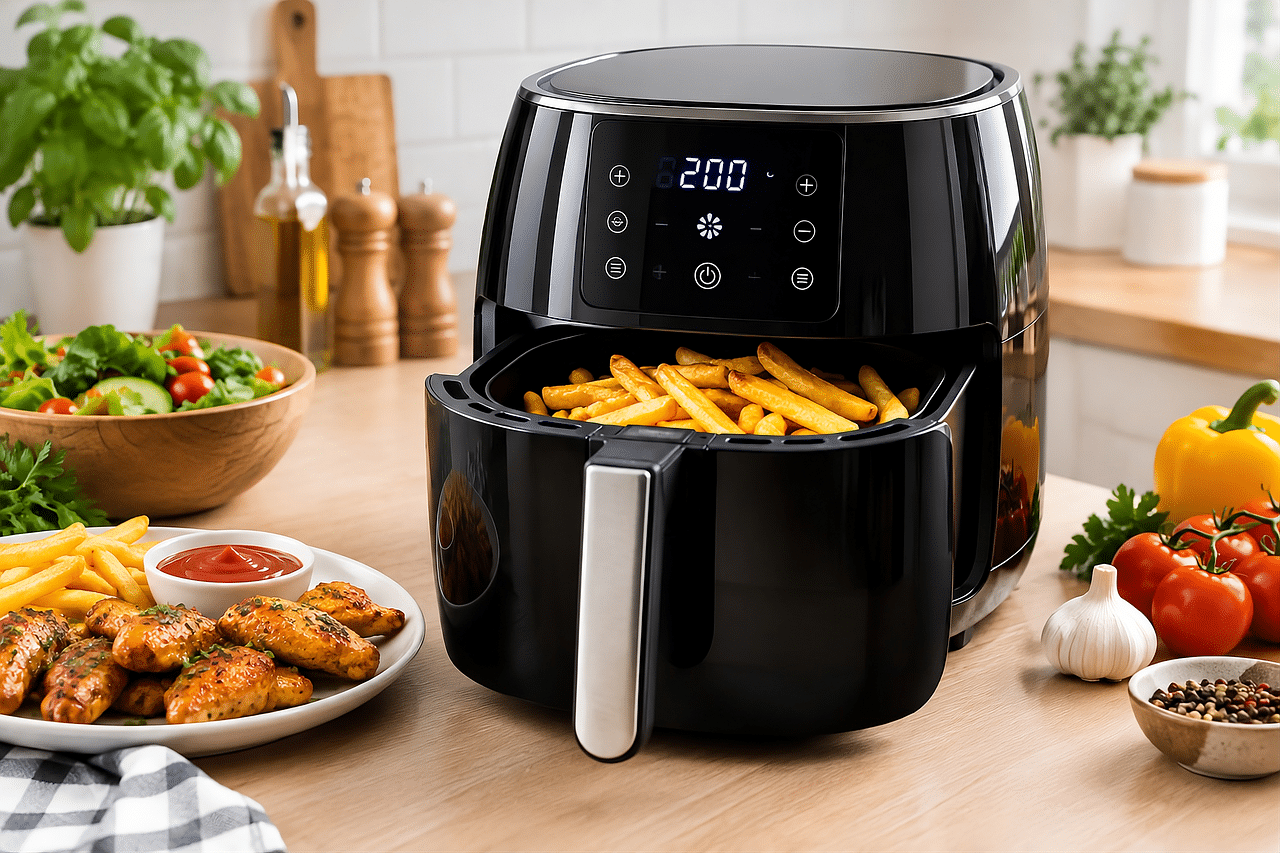
A typical basket air fryer is a compact countertop convection appliance. Its heating element and fan move hot air through a small chamber and around food placed in a perforated basket or on a crisper plate. Some air fryers look more like miniature ovens, with shelves and a front door. The label tells you about a cooking style, not one standardized size, fan speed, or temperature profile.
A convection oven also uses a fan to circulate heated air, but it may be a countertop oven or a full-size oven built into a range or wall. Its larger interior generally accommodates pans, baking dishes, or multiple racks. Some models offer a separate air-fry setting, while others use an ordinary convection setting; the practical difference between those settings depends on the manufacturer’s design.
For a small serving of frozen fries or a quick reheat, a basket air fryer can be convenient and produce an appealing crisp surface. A convection oven may be easier when you want to roast a whole meal, bake a tray of cookies, or use a larger dish. Neither guarantees a particular outcome: food thickness, moisture, pan choice, loading, and the appliance itself all matter.
In this guide, you will see how air circulation affects cooking, how usable capacity compares with the space an appliance occupies, and how to think about energy without assuming that one machine always costs less to run. You will also find practical questions to ask before buying, including whether your existing oven already does what you need. Start with the meals you make most often, and use the distinctions below to decide which option earns its place in your kitchen.
Core Differences in How Air Fryers and Convection Ovens Cook
Air Circulation Speed and Heating Element Proximity
Both appliances rely on convection: a heating element warms the air and a fan moves that air around the food. Moving air carries heat to exposed surfaces and helps moisture evaporate, encouraging browning. A conventional bake setting without a fan works differently, so check that you are comparing an actual convection setting rather than assuming every oven has one.
In many basket air fryers, the element and fan sit above a compact cooking cavity. The basket or crisper plate raises food above the bottom and allows air to reach it from more than one direction. Close proximity between the food and the heating assembly can make small batches respond quickly, although the exact arrangement varies between models.
A convection oven has a fan that moves heated air around its cavity, often from the back. A countertop convection oven may be relatively compact, while a full-size range can be much larger. Some have multiple fan settings or an air-fry mode. You cannot reliably judge performance by the name alone: fan power, cavity geometry, rack position, and the amount of food all affect the result.
Pan design matters as well. A low-sided tray or perforated basket exposes more surface to moving air than a deep, crowded dish. In an oven, a wire rack set over a compatible rimmed pan can improve exposure while catching drips, provided the manufacturer permits that setup. Always leave enough room around the food and follow clearance instructions for the appliance.
For cookware decisions, see our guide to types of ceramic cookware for the oven. Check the vessel’s temperature rating and whether its maker permits convection use; not every oven-safe item is suitable for a small basket or for direct exposure to a nearby element. Avoid blocking the fan or touching the heating element, and do not assume glass or ceramic can tolerate sudden temperature changes.
Cooking Time and Surface Crispiness Differences
A small air fryer can preheat and cook a modest batch quickly because it heats a compact space. That does not mean every air fryer is faster than every convection oven. A small countertop oven may preheat quickly too, while a full-size oven needs to warm a larger cavity. Food quantity, starting temperature, the selected mode, and whether preheating is required make the comparison meaningful.
Crispness depends on moisture leaving the surface and sufficient space for air to circulate. Patting suitable ingredients dry, arranging them in a single layer, and turning or shaking when the appliance instructions recommend it often make more difference than the label on the machine. A light coating of oil can help some foods brown, but follow your recipe and avoid loose sprays or excessive oil where the manufacturer advises against them.
Here is a practical comparison for everyday use:
- Small portions: A basket air fryer is convenient for a modest amount of fries, vegetables, or leftovers.
- Large batches: An oven’s wider racks may let you spread more food out without running consecutive batches.
- Even browning: Both benefit from space around the food; rotate pans or turn pieces when needed.
- Wet batters: These can drip through a perforated basket and are not automatically interchangeable with deep frying.
- Delicate baking: Strong airflow may disturb lightweight toppings or alter the surface of some cakes and pastries.
When adapting a recipe, begin with the appliance maker’s guidance rather than applying a fixed conversion to every dish. Check for browning earlier than the original oven recipe suggests and adjust time or temperature if needed. Record what worked for your own appliance and pan, because two machines set to the same displayed temperature may cook differently.
Most importantly, color alone is not a food-safety test. Use a food thermometer and the appropriate safe internal temperature for meat, poultry, seafood, and reheated leftovers. Give thicker pieces enough time to cook through even if the outside is already brown.
Capacity, Footprint, and Daily Usability
Basket Capacity vs. Sheet Pan Real Estate
Basket capacity is often advertised in quarts, but the number does not tell you how much food can be spread in a useful single layer. A deeper basket might hold a lot when filled to the top while leaving too little exposed surface for even crisping. Look at the shape and dimensions of the removable plate as well as the stated volume.
For a quick meal for one or two, a basket may fit a practical portion of vegetables, fish, or frozen snacks. For a larger household, you might need several rounds. That can still be convenient for an occasional side dish, but it becomes less attractive when every part of dinner must wait for a separate batch. Dual-basket models provide flexibility, though each basket still has its own limits.
A convection oven can offer wider sheet-pan space, and some full-size models can hold multiple racks. That makes it easier to roast a larger amount, bake several items, or cook a main dish alongside a side. Not every countertop oven accepts the same pan sizes, however, and a loaded oven may need pan rotation for even results. Measure the inside, not just the exterior.
Think about the shape of the foods you cook. A tall roast, loaf pan, casserole dish, or pizza may fit better on an oven rack than in a drawer basket. A basket can be easier for shaking loose pieces, while a sheet pan provides more room for arranging delicate food without piling it up. Check the manufacturer’s maximum load and keep food away from the heating element.
Cleaning also differs. Basket inserts may be removable, but grease can collect around a crisper plate and in corners. An oven gives you trays and racks to wash and may need its interior wiped down. Check the maker’s care instructions before using a dishwasher, abrasive tool, or chemical cleaner. Our guide to non-stick frying pan coatings explains why a coated cooking surface deserves gentle care.
Preheating Speeds and Energy Consumption
Preheating instructions vary. Some air fryer recipes tell you to start with a cold appliance; others call for a brief preheat. Countertop and full-size convection ovens also differ, and a preheat indicator may not mean every pan inside is at the same temperature. Follow your appliance’s instructions and the recipe’s requirements, especially for baking where a consistent starting temperature can matter.
For a small portion, heating a compact cavity for a short period may use less electricity than heating a large oven. That is a useful possibility, not a universal promise. An oven cooking several portions at once can spread its energy use over more food, while an air fryer may need repeated batches. Insulation, power cycling, recipe temperature, preheating, and actual cooking time all affect the outcome.
To make a more useful comparison, consider the entire meal rather than only the wattage printed on a label. Wattage is a power rating, not a direct measurement of the total electricity used for a recipe. If you want to estimate consumption, use an appropriately rated electricity monitor only where safe and permitted by its instructions, or compare manufacturer information for the appliances and cooking conditions you are considering.
A simple planning question is: how many batches will you need? If an air fryer completes a side while your larger oven is already cooking a roast, you may gain convenience rather than avoid running the oven. Conversely, using a small countertop appliance for a modest lunch may let you leave the large oven off. Your actual routine determines whether either choice is worthwhile.
Preheating is also about food quality. A fully warmed pan or oven may give pastry or bread a better start, while reheating leftovers can be more forgiving. Do not skip a required preheat just to save a few minutes, and never put an empty dish or liner into an appliance unless its manufacturer says it is safe.
Countertop Footprint and Kitchen Heat
An air fryer usually sits on the counter, so its footprint is only part of the space calculation. You also need room to pull out the drawer, set down a hot basket safely, and maintain the clearances specified by the manufacturer. Measure height under cabinets as well as width and depth, and remember that a bulky appliance may be awkward to store in a high cupboard.
A countertop convection oven can be wider, with a door that opens forward and trays that need to slide out. Check the path of the door, the location of the outlet, and the recommended space around the unit. A full-size convection oven does not occupy additional counter space, but it uses an existing range or wall installation and may not be an option if you are choosing a portable appliance.
Both appliances release some heat into the kitchen. A compact air fryer often runs for a shorter time when cooking a small portion, which can make it feel preferable on a warm day; a countertop oven can also be a useful alternative to heating a full-size oven. Actual heat and comfort vary with the appliance, cooking time, and ventilation, so treat this as a practical consideration rather than a guaranteed temperature difference.
Think about noise and access too. Fans make some sound, and the pitch and volume differ by model. A drawer-style basket requires you to pull and lift the hot food, while a clear oven door may let you check progress without opening it. If you have limited hand strength or counter space, examine the weight and handle position before buying.
Keep either appliance on a stable, heat-resistant surface and use the manufacturer’s clearance guidance. Do not place it under low cabinets or against a wall if the instructions prohibit it, and avoid covering vents. Let parts cool before washing or storing them.
Choosing the Right Appliance for Your Cooking Style
When an Air Fryer Makes the Most Sense
Choose an air fryer when most of your intended jobs involve small portions and you value a quick, accessible basket. It can be a good fit for reheating a few pieces of pizza, crisping vegetables, cooking a small portion of chicken, or preparing frozen snacks without turning on a full-size oven. The convenience comes from the whole routine: a manageable chamber, a removable basket, and relatively simple portion control.
Before buying, write down two or three meals you expect to make each week. Check whether the food can lie in a reasonably uncrowded layer and whether the basket is easy for you to lift and clean. A larger advertised capacity may be useful, but it also increases the appliance’s counter and storage requirements. If you often need several separate batches, compare that time with what your existing oven can do in one session.
Consider the controls you will actually use. A readable temperature display, an accessible timer, a removable crisper plate, and a pause or basket-removal feature may matter more than a long list of presets. Presets are starting points, not guarantees that a particular piece of food is cooked safely. Check whether replacement baskets or plates are offered by the manufacturer and read the cleaning instructions before you decide.
If you already own a convection oven, you do not automatically need a separate air fryer. Try spreading a small batch on a suitable low-sided pan or rack using your oven’s recommended convection or air-fry setting. If the result and cleanup fit your routine, keeping your existing equipment may be the simplest choice.
An air fryer is less attractive if you expect it to replace a full-size oven for large casseroles, multiple trays, or bulky cookware. It is a focused countertop tool, not a mandatory upgrade. Choose it because the tasks you repeat are easier with its shape and handling, not because every meal supposedly needs higher airflow.
When a Convection Oven Is the Smarter Investment
A convection oven is often the more flexible choice if you cook larger meals, bake regularly, or want room for different pan shapes. A countertop convection oven can combine several functions in one unit; a full-size convection oven can accommodate dishes that a small basket cannot. Either may suit you better if you routinely roast vegetables for several people or want to bake a full tray at once.
Inspect the usable interior rather than relying only on the outside dimensions. Bring the measurements of your favorite sheet pan, baking dish, or loaf pan and check the appliance’s rack positions. Allow for the space required around the pan and any restrictions on cookware. A compact oven with a convenient air-fry basket may cover both jobs without a second appliance, but features and capacity vary by model.
Ask how the convection and air-fry modes differ on the specific machine. The manual may describe fan behavior, recommended rack position, and whether the appliance includes a perforated tray. Those details are more helpful than assuming that a setting with a particular name reproduces a standalone air fryer. Look for clear controls, a door you can open safely, accessible trays, and cleaning instructions you are comfortable following.
For delicate baked goods, follow the recipe and manufacturer’s directions about whether to use the fan. Some recipes are developed for conventional heat, and a conversion may need adjustment. Check early for browning, rotate pans when appropriate, and make notes so that your next batch suits your equipment.
The best choice is the one that handles your frequent meals with the least friction. If most of your cooking is a small crispy side and you have a suitable place on the counter, an air fryer may be the easier companion. If you value larger trays, baking space, and a wider range of cookware, a convection oven is likely the better investment. If your current appliance already meets those needs, you may not need to buy anything at all.



Copyright 2026 © Beyond the Embrace
Beyondtheembrace.com is a participant in the Amazon Services LLC Associates Program, an affiliate advertising program designed to provide a means for sites to earn advertising fees by advertising and linking to Amazon.com.